
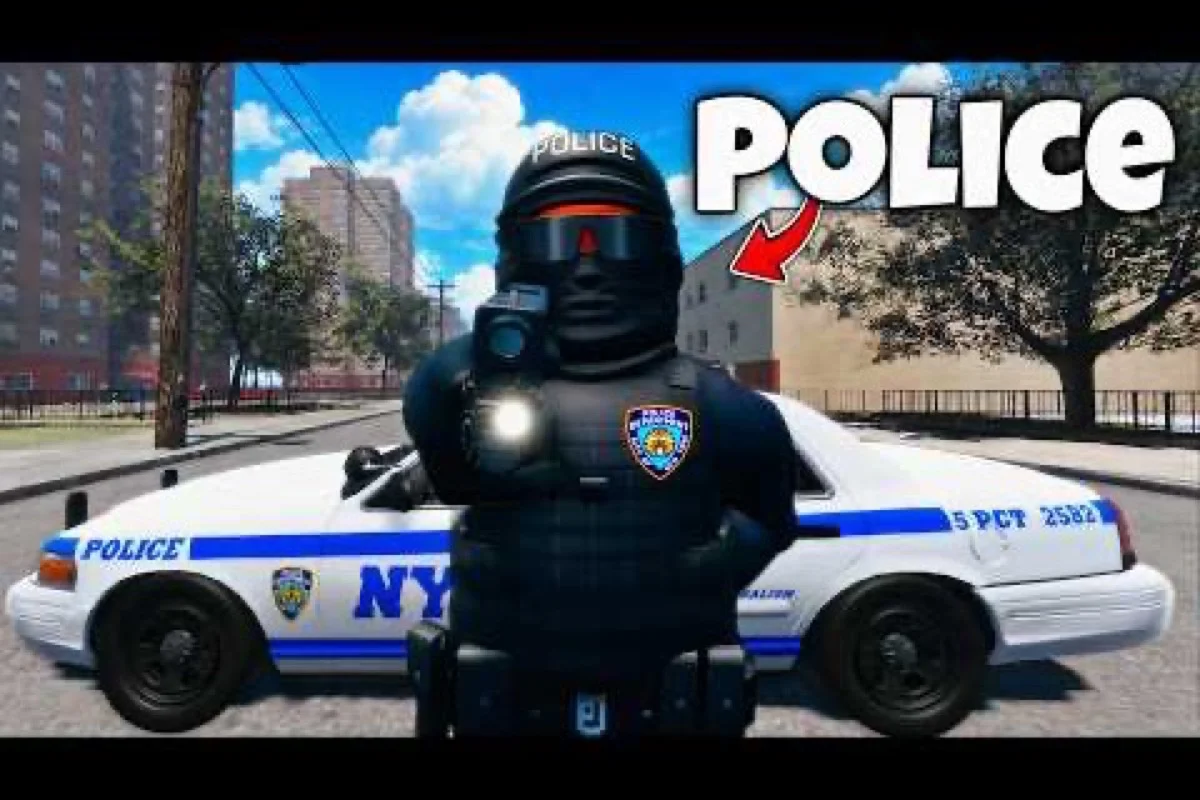
The THA BRONX 3 officer role turns the police into an active service job: clock in, issue commands, pursue wanted players, and deliver prisoners to the facility. Knowing the tools and legal process helps you stay calm, work with the team, and make fair decisions.
Duties, Tools and Shift Flow
The officer role is more than selecting a badge from a menu. You become part of the city’s emergency-response loop, using force only when necessary and keeping arrests consistent with the rules. The role is available through the public Police Officers game pass, which reportedly adds an on-screen NYPD badge.
A complete shift connects the THA BRONX 3 police role’s core systems, so each action should support the next: patrol creates awareness, the megaphone controls movement, and a verified arrest feeds the court and prison process. For example, officers should use the megaphone to redirect civilians before closing in on a wanted player, then confirm eligibility and custody requirements instead of making an arrest that the law system cannot process. That sequence turns individual tasks into coordinated unit operations.
| Officer duty | Main purpose | Best priority |
|---|---|---|
| Clock in and patrol | Enter an active duty state | Start with the team |
| Use the megaphone | Warn, redirect, and manage crowds | Keep civilians calm |
| Respond to reports | Locate wanted players or trouble | Verify the situation |
| Arrest eligible suspects | Apply consequences through the police system | Follow role rules |
| Transport prisoners | Move detainees into the prison process | Keep custody secure |
| Complete the shift | End duty and receive the outcome | File a clean report |
Clocking In and Taking Assignments
Community footage shows that the officer role is entered through a public game pass, so check that the pass is active before expecting badge controls or police tools to appear. Once access is granted, clock in at the relevant post and wait for assignments or nearby calls. A recent community officer-session video by semi documents a full shift that includes responding to wanted players and transferring arrested players into the prison loop.
The best approach is to group your shift into Patrol, Response, and Custody phases. Patrol lets you learn the streets, response tests whether you can identify and contain a suspect, and custody checks whether you can follow the paperwork and transport process without losing track of a prisoner.
The Megaphone and Public Control
The megaphone is a practical crowd-control tool, not simply a way to shout. It helps you give instructions at a distance, separate bystanders from danger, and announce why the police are present. A short, clear instruction is easier to follow than repeated threats or exaggerated orders.
Use the megaphone to establish a simple sequence: state what the crowd must do, point out a specific route or safe area, and repeat the instruction once for clarity. In a busy Bronx 3 encounter, giving one concrete direction—rather than several competing orders—helps civilians move predictably while preserving the officer’s control of the scene.
-
Identify the immediate danger.
-
Tell civilians where they should move.
-
Warn the suspected player to stop and comply.
-
Explain that force will be used only if the warning is ignored.
A consistent command sequence also improves the record of a Bronx 3 arrest: if the officer identifies the immediate danger, gives one safe direction, warns the suspected player, and repeats the order clearly, civilians can describe the sequence in a specific order rather than relying on conflicting shouts. That clarity matters later in the court and prison systems, where an arrest narrative may be retold through 911 calls, witness statements, and the officer’s testimony; precise details about instructions and compliance help distinguish a planned arrest from an unnecessary use of force, without guaranteeing any particular legal outcome.
THA BRONX 3 Police Tips for an Effective Shift
Good THA BRONX 3 police tips focus on preparation, restraint, and clear callouts. The main Roblox listing for THA BRONX 3 on Roblox described 30-player servers and a fast action format when the page was checked on October 24, 2026, so you should never assume that a suspect has room to escape or that teammates can hear you without coordination.
| Situation | Recommended response | Avoid |
|---|---|---|
| Suspect is fleeing | Announce the direction and pursue with backup | Chasing alone through crowded streets |
| Suspect has stopped | Issue a clear warning before using force | Firing before the target can respond |
| Civilians are present | Use the megaphone and move them away | Treating everyone as a suspect |
| Prisoner is arrested | Confirm the route and keep the detainee secure | Leaving custody without a plan |
| Backup is nearby | Assign one officer to cover while another arrests | Several officers firing at once |
Watch the Wanted State, Not Just the Player
A suspect can look harmless until their wanted state becomes visible. Begin with the simplest observable facts: movement, nearby witnesses, weapon use, and whether the player responds to commands. Do not treat another player’s clothing, reputation, or location as proof of guilt. The wanted-state check should happen before every arrest. Ask whether the target is actually marked, whether the mark is still active, and whether another officer has already secured the player. This prevents accidental civilian arrests and reduces unnecessary force.
Coordinate Without Crowding the Scene
A team works best when every officer has a distinct task. One person can keep the suspect focused, another can control the street, and a third can prepare the transport. Give short assignments such as “cover the left,” “watch the civilians,” or “prepare the car” rather than giving several people the same instruction. If you are new to the THA BRONX 3 police role, practice with an experienced group. The broader police officer guide provides useful role-specific guidance on access, arrests, and wanted levels, which can reduce confusion during your first call.
Use Force as a Last Controlled Step
The game’s law-and-order structure works best when the police do not skip the progression from warning to force. A visible warning gives the wanted player a chance to stop. If the suspect continues resisting or presents an immediate threat, the team can act without making the encounter look random.
Think of force as a controlled escalation, not the opening move. Tell the suspect what will happen, give a clear opportunity to comply, and coordinate the response with nearby officers. This is especially important when civilians are standing close enough to be caught in the action.
Arrests, Transport, and the THA BRONX 3 Prison Loop
A successful arrest is only the beginning of the THA BRONX 3 prison tips workflow. The detainee still has to be transported, booked, and processed through the court and correctional process. Community reports and officer-session footage describe this as a distinct prison loop, so officers should not treat the moment of arrest as the end of the assignment.
| Stage | Officer objective | Common mistake |
|---|---|---|
| Detection | Confirm the wanted state | Arresting an unmarked player |
| Approach | Control the scene and issue warnings | Acting before the suspect reacts |
| Arrest | Secure the eligible suspect | Leaving the target beside the scene |
| Transport | Move the prisoner toward the facility | Losing sight of the detainee |
| Booking | Register the arrest for processing | Omitting required details |
| Court and prison | Complete the legal sequence | Forcing the narrative past role rules |
A Repeatable Arrest Routine
Use the same sequence every time, especially when multiple officers are present. First, identify the marked suspect. Second, warn them. Third, approach with a clear line of sight. Fourth, arrest only when the role allows it. Fifth, check the player’s condition and immediate surroundings.
This five-stage arrest sequence reduces accidental arrests and gives the team a shared routine. It also makes your actions easier to explain during a later court scenario. If you need a closer breakdown of the individual stages, the arrest and court guide explains the wanted, jail, courtroom, and judge flow.
Transporting an Arested Player
Do not assume the shortest route is always the best one. Watch for doors, intersections, vehicles, and other officers who may need access. Keep the arrested player under control and avoid taking them through a crowded public event unless the situation requires it.
Transport works best when one officer handles custody and another handles navigation. That division reduces the chance that the prisoner is abandoned during a sudden pursuit or that the team drives into a blocked street. If the detour is necessary, call it out so the rest of the unit can update their route.
Prison-Side Discipline
The THA BRONX 3 prison tips that matter most are procedural. Keep detained players separated from civilian players, avoid improvised confrontations, and allow the role’s booking process to advance in order. A prisoner should not be released simply because another officer claims the arrest was invalid; use the available legal or correctional system instead. For map orientation, the police station, prison, and court locations can help you plan the custody route. Knowing the entrance in advance saves time, but the route may still vary as the city and its facilities receive updates.
Understanding the THA BRONX 3 Court System
The THA BRONX 3 court system is the formal side of the police-prison loop. Your job as an officer is to gather clear facts, preserve evidence, and deliver a detained player into the process without making up details. The court can then determine what happens next, but the quality of that decision depends on what the team did in the field.
| Court-related input | How officers should handle it | Why it matters |
|---|---|---|
| Wanted status | Record when the state was visible | Establishes the reason for the arrest |
| Surroundings | Note the location and immediate threats | Places the event in context |
| Suspect behavior | Describe warnings and resistance factually | Clarifies the escalation |
| Injuries or damage | Report only what you observed | Supports proportional decisions |
| Arrest timing | Keep the sequence consistent | Connects field action to custody |
Keep Evidence Separate From Assumptions
An officer may suspect that someone caused a problem, but suspicion is not the same as a confirmed event. The court system is strongest when every statement answers a simple question: “What did I directly observe?” If you did not witness the act, identify the source of the information instead of presenting it as established fact.
Use the observation boundary as a mental checklist. You saw the wanted mark, heard the warning, and watched the player draw a weapon—or you learned these details from another officer. Keeping those categories distinct makes your report consistent and reduces confusion in the courtroom.
How the Law System Differs From Combat
The THA BRONX 3 law system is not simply another combat category. Weapon skill can help you contain a dangerous suspect, but legal order requires more. You must move through the arrest, booking, court, and prison steps, and you must respect the role’s boundaries.
This distinction matters for new officers because winning a suspect encounter does not complete the THA BRONX 3 officer role. A successful arrest still has to move through the full law-system chain—booking, court, and prison—with each decision affecting whether the custody process remains lawful. For example, subduing a suspect but skipping the booking requirement or misusing force can invalidate the intended progression, leaving the officer short of the assignment’s legal finish. The objective is therefore not simply combat survival; it is a completed, legally valid custody sequence that ends with the suspect in prison.
Roleplay the Procedure, Not Just the Punishment
Good courtroom roleplay benefits from clear speech and consistent behavior. State the facts, listen to the relevant information, and avoid interrupting the process with excessive threats. If a suspect argues, let the court system address the dispute rather than reopening the chase.
Following the established sequence in the tha bronx 3 court system makes it easier to separate a genuine emergency from a heated roleplay dispute. For example, an officer can document the facts, identify the relevant witnesses, and escalate the matter through the proper legal process instead of continuing a street confrontation on the spot. This gives both the NYPD roleplay and players entering court after a chaotic encounter a clear record of what happened, while preventing the tha bronx 3 police from appearing to punish conduct before the court has assessed it.
Advanced Officer Strategies for Chases and Coordination
Advanced officers optimize the entire response rather than only the final confrontation. A fast arrest is valuable, but a clean arrest with witnesses, an intact scene, and a completed prison transfer produces a stronger result for the whole team. In practice, that means assigning one officer to preserve evidence and keep witnesses separated while the arrest team controls the vehicle and the route to the precinct; the prison transfer must also be completed without losing custody of the suspect. This coordination matters because the Bronx 3 court system, NYPD procedures, and prison processing can all expose mistakes made during the pursuit or scene management.
The Chase Triangle
A reliable chase uses three positions: the lead officer maintains contact, the support officer controls a side route, and the support officer controls the opposite side. The trio creates several possible response paths without spreading the team so widely that nobody can assist.
| Chase position | Assignment | Why it works |
|---|---|---|
| Lead | Follow and communicate the suspect’s movement | Maintains visual contact |
| Left support | Cut toward likely side streets | Limits escape angles |
| Right support | Cover the opposite route | Prevents one-sided pursuit |
| Rear | Watch the original direction | Catches a reversal |
The key metric is communication quality, not raw speed. If only the lead officer knows the direction, the backup is functionally absent. Repeat short location updates, and change them immediately when the suspect turns or uses a vehicle. For example, calling the suspect’s last confirmed corner, direction of travel, and vehicle description lets the left and right support officers choose separate intercept points without abandoning the lead’s visual contact; a vague “keep going” message gives the rear position no basis for covering a reversal.
Use Vehicles Without Losing Control
A vehicle can close distance, block a route, or transport a prisoner, but it also changes the risk. Crowded intersections, blocked alleys, and unclear camera angles make it easier to lose sight of a target. Confirm before committing to a fast pursuit, and keep another officer on foot when possible.
A useful rule is to divide responsibilities between mobility and observation. The driver can follow the route, while another officer tracks the suspect from a safer angle. Once the arrest occurs, the team should switch back to a controlled formation rather than scattering in several directions.
The Megaphone as Triage Tool
During a complicated call, the megaphone should prioritize immediate information. Tell civilians which way to move, announce that police are present, and warn the wanted player to stop. Save elaborate explanations for after the scene is safe, because rapid instructions are more valuable during the first few seconds.
Good megaphone use follows the three-message limit: spend each announcement on a function the suspect or nearby civilians can act on immediately, such as identifying the threat, assigning a route, or stating the lawful consequence of ignoring the warning. In The Bronx 3, issuing a separate line for every detail can dilute the urgency of the command, so the officer should combine only compatible details, speak before the suspect closes distance, and avoid wasting the megaphone on threats that cannot be enforced.
-
One message identifies the danger.
-
One message gives a clear direction.
-
One message states the consequence of noncompliance.
When the megaphone cannot produce a clear response, treat the silence as operational information rather than issuing a fourth or fifth message. For example, if the wanted player ignores the warning and closes distance while civilians remain uncertain about the route, the officer should prioritize containment over repeated announcements. Continuing to shout can reduce the practical value of the first three commands, distract civilians from moving, and allow the suspect to reach the officer before the scene is controlled.
Handle Mistakes Directly
Officers can misread a call, lose a suspect, or arrest the wrong target. The useful response is immediate correction: release an innocent person, restore the player’s state, and communicate what happened. Continuing after a known mistake makes the case weaker and can create confusion for the court.
Community footage of the police and prison update shows how quickly mechanics can change when the experience receives an update. Review the update recap for the police and prison changes before a major event so you are not relying on an outdated control layout or sequence.
Frequently Asked Questions
Can anyone use the THA BRONX 3 officer role?
Access is associated with the public Police Officers game pass, according to community video and reporting. If badge controls or assignment options do not appear, confirm that the pass is active and that the latest version of the experience is loaded. Availability and interface details may change with future updates.
What should an officer do first during a chase?
Identify the wanted player, warn them, and maintain clear communication with the team. Keep at least one officer on foot to cover a side route, because a 30-player server can quickly fill with civilians and opposing players. Make the arrest only when the situation and role rules allow it.
How do prisoners move through the THA BRONX 3 prison system?
After an eligible arrest, the officer transports the detainee into the custody and booking process. The broader sequence then continues through the court and prison stages. Officers should follow the available interface rather than trying to skip directly to sentencing, especially after recent police or prison updates.
Is the megaphone useful during THA BRONX 3 police encounters?
Yes, because it helps officers separate bystanders, announce warnings, and coordinate at a distance. The best prompts are short and direct: identify the danger, give one direction, and explain the consequence of refusing to comply. Repeated shouting usually indicates that the first instruction was unclear.
What is the best way to learn the THA BRONX 3 law system?
Join a call with experienced officers and watch the full sequence, from the wanted mark to arrest, booking, court, and prison transfer. The separate roleplay-oriented RP Server may provide a slower setting for learning procedures. Always confirm current controls against the official game page and recent update notes.